Digital Transformation of the Tourism Industry
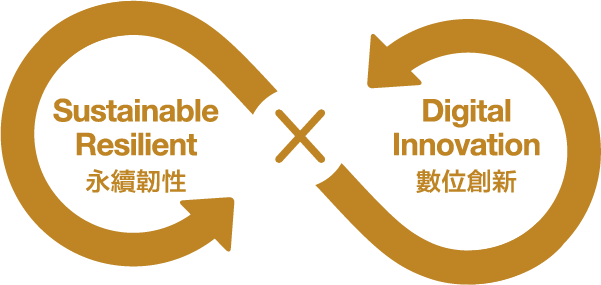
In response to the global AI wave and post-pandemic travel trends, the Taiwan Tourism Administration comprehensively promoted the dual-track transformation of the tourism industry and national scenic areas, with "Sustainable Resilience & Digital Innovation" at its core. On the industry side, the administration organized the Digital Transformation Expo for the Tourism Industry and the Tourism Cup Open Data Hackathon to guide small and medium-sized operators (SMEs) in adopting AI translation, automated services, and sustainable management tools, addressing labor cost challenges while strengthening value-added data applications. Concurrently, it advanced data governance by introducing telecommunications signaling for visitor flow monitoring, building Progressive Web App (PWA) mobile travel services, and adopting AI multilingual guide systems and digital twin technology, thereby enhancing immersive visitor experiences and management efficiency. Through technology empowerment and the online-to-offline (O2O) integration, Taiwan has tangibly improved the quality and international competitiveness of its tourism services.
2025 Digital Transformation Expo for the Tourism Industry
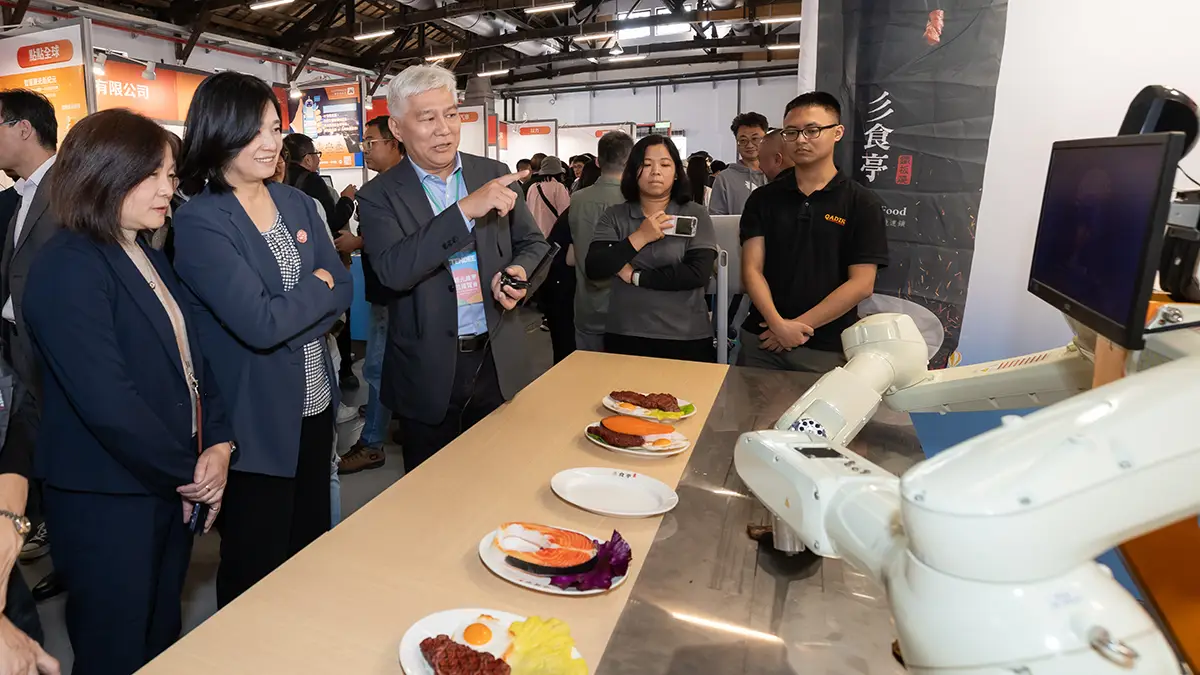
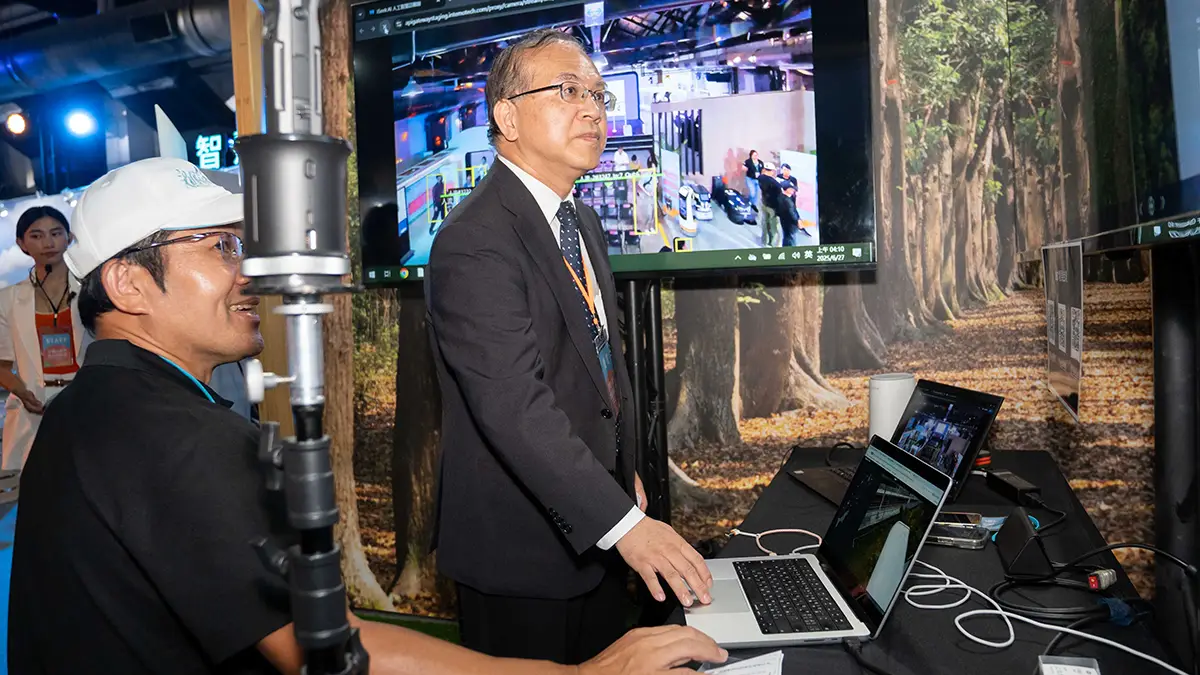
To help small and medium-sized tourism operators understand and adopt innovative digital tools, the Tourism Administration expanded the 2025 Digital Transformation Expo for the Tourism Industry in 2025, holding events in both southern and northern Taiwan. The southern event was held from June 27 to 29 at Pier-2 Art Center's Penglai B4 Warehouse in Kaohsiung, in its first-ever integration with the Solar Festival in Taiwan. It featured four specially designed themed zones: "Travel Exploration Station," "Tourist Amusement Station," "Smart Scenic Areas," and "Lodging Service Station." Through immersive scenario-based displays, the event presented nearly 20 technology products, including AI-powered ramen machines, smart cocktail machines, AI virtual human guides, AI real-time two-way translators, and 360-degree panoramic electronic safety fencing, driving digital transformation awareness across southern Taiwan's tourism sector.
The northern event was held from December 2 to 3 at Taipei Songshan Cultural and Creative Park. The "Thematic Forum" convened representatives from industry, government, and academia to discuss policy promotion for the digitalization of the tourism industry and strengthen consensus on tourism development. The "Smart Technology Experience Zone" brought together more than 40 technology companies, showcasing innovations such as intelligent bubble tea and xiaolongbao machines, smart chef robotic arms, inter-floor service robots, and AI-powered smart multilingual guide systems. In addition, through the "Matchmaking Salon," operators were able to explore tourism technology products, receive transformation counseling, and learn about forward-looking trends based on the diverse needs of the tourism industry. These initiativesassisted operators in reducing labor costs and improving service quality, while continuing to expand the exhibition's brand influence and deepening industry-academia exchange. The event attracted 10,161 visitors.
Tourism Cup Open Data Hackathon
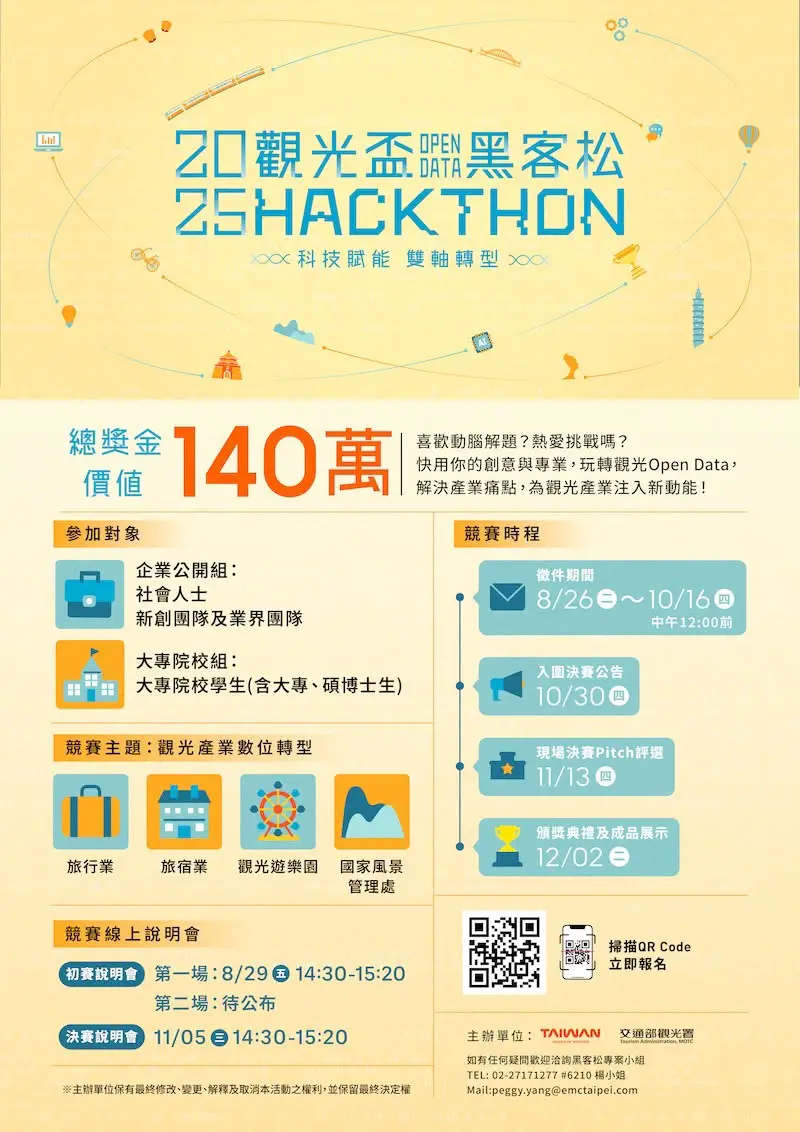
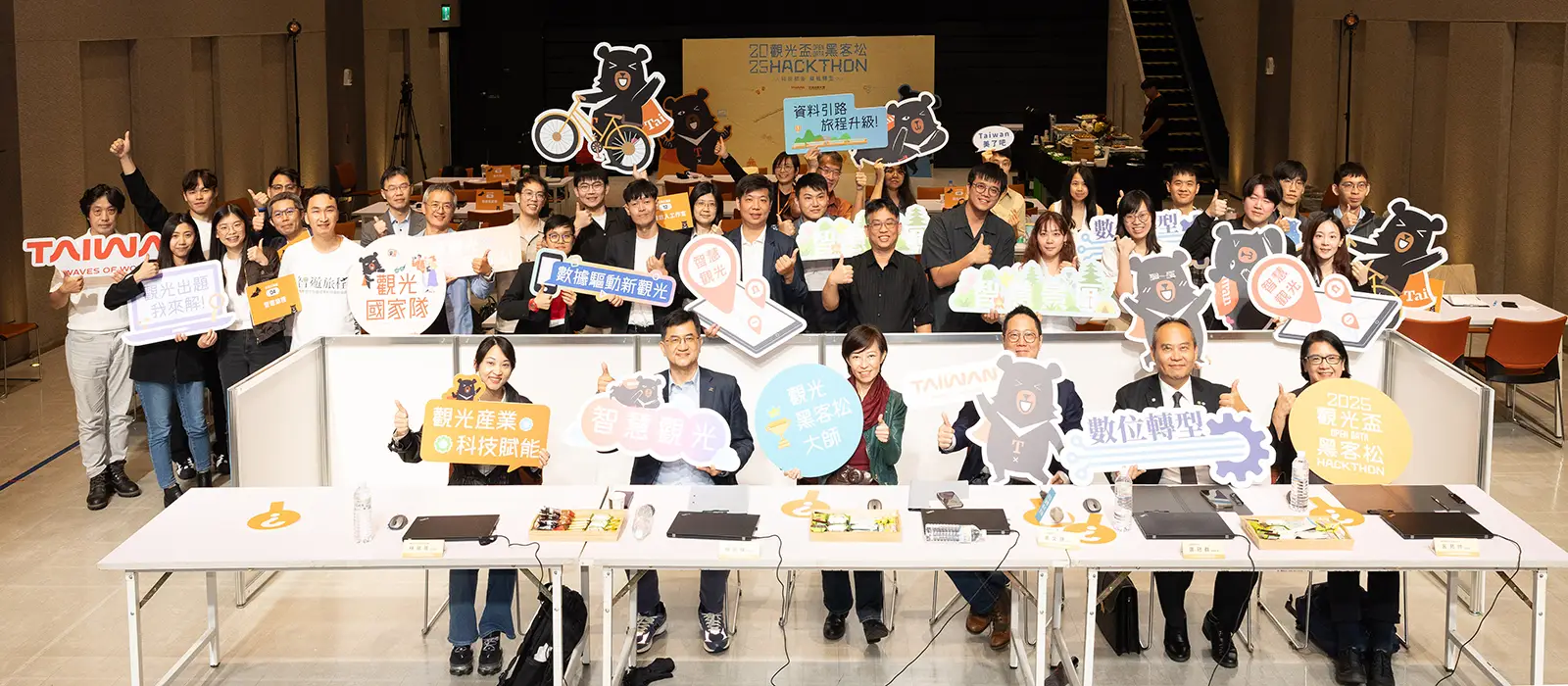
In 2025, the scope of submissions for the hackathon competition was expanded to strengthen the value-added use of tourism open data. For the first time, enterprises and start-up teams were encouraged to participate. A total of 109 teams registered, and 13 winning teams in the Enterprise Open Category and 11 winning teams in the College and University Category were ultimately selected. The winning entries closely addressed industry pain points and widely integrated technologies such as AI, big data, and computer vision to propose viable, and market-ready solutions.
These included the use of generative AI to create "virtual tour guides and personalized itinerary assistants," the integration of ESG concepts to launch "carbon footprint tracking and green lodging recommendations" for environmentally friendly travel, the development of an "AI visitor flow and traffic system" to address crowding issues in scenic area management, and the design of an "accessible travel app" to promote travel equity. Together, these smart and sustainable solutions inject fresh momentum for innovation across the tourism sector.