Digital Transformation of Smart Scenic Areas
Transforming Smart Scenic Areas: A New Model for Tourism Data Governance and Service
In response to global tourism development trends and domestic industry upgrading needs, the Tourism Administration actively promoted its "Smart Scenic Area Transformation" strategy to realize the goals of sustainability, innovation, and smart governance advocated in the Taiwan Tourism 2030 White Paper. Built on the core pillars of "data integration, technology adoption, and service innovation", the Tourism Administration focused on three dimensions—"smart management," "smart services," and "smart marketing"—to drive the evolution of data governance and services across scenic areas in Taiwan.

1. Smart Management
Data integration and early warning systems were strengthened to improve governance efficiency. In addition to introducing AI recognition of pedestrian and vehicle flows at popular sites and smart public restrooms equipped with odor and supply detection functions, innovative applications were adopted based on individual administration needs. For example, AI image recognition technology was used to create a digital fence to prevent motorcycles from entering illegally along the Sun Moon Lake bikeway. The North Coast and Guanyinshan National Scenic Area Administration (NSA) also strengthened water safety monitoring, significantly reducing the manpower required for patrol inspections while enhancing safety protections.
2. Smart Services
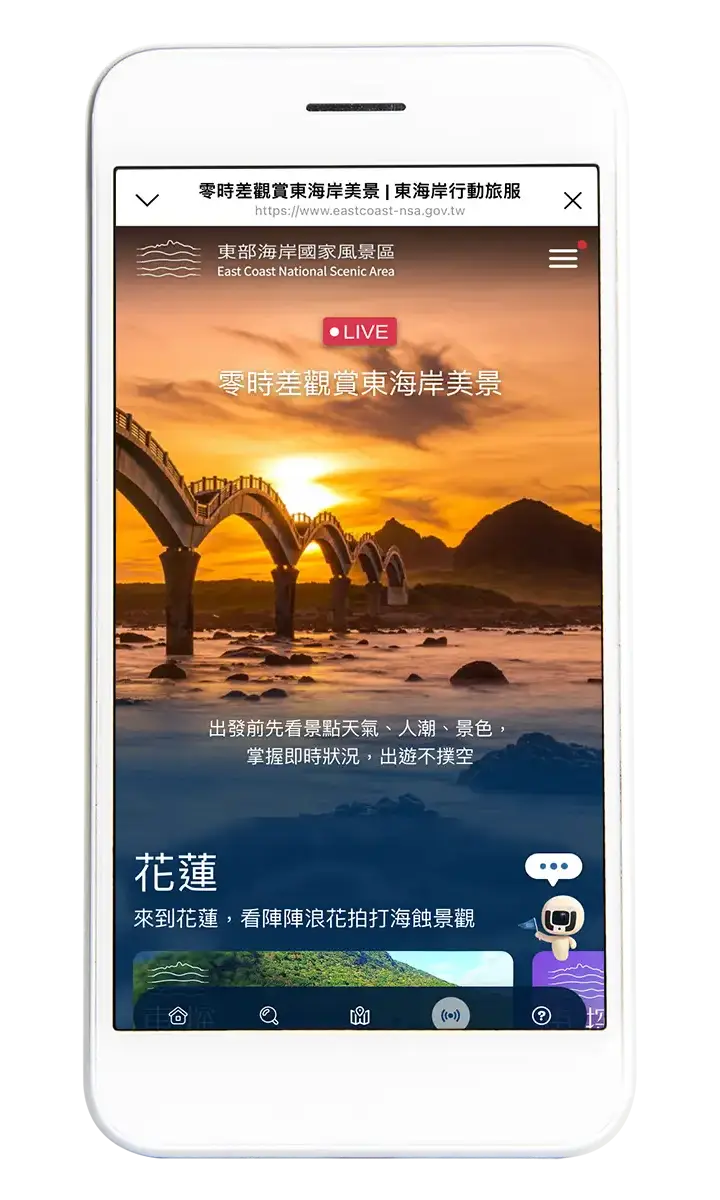
Seamless digital experiences were provided for visitors. The "Progressive Web App (PWA) mobile travel service" systems for the Northern Region, Eastern Region, and Kinmen tourism circles were completed as a priority. By integrating location-based services (LBS), the systems proactively deliver real-time transportation and travel information. At the same time, digital twin and AR/VR technologies were used to create immersive experiences, such as the Tri-Mountain National Scenic Area Administration's (NSA) virtual micro theme pavilion and the Northeast Coast 3D travel map, enhancing both travel convenience and visitor engagement.
3. Smart Marketing
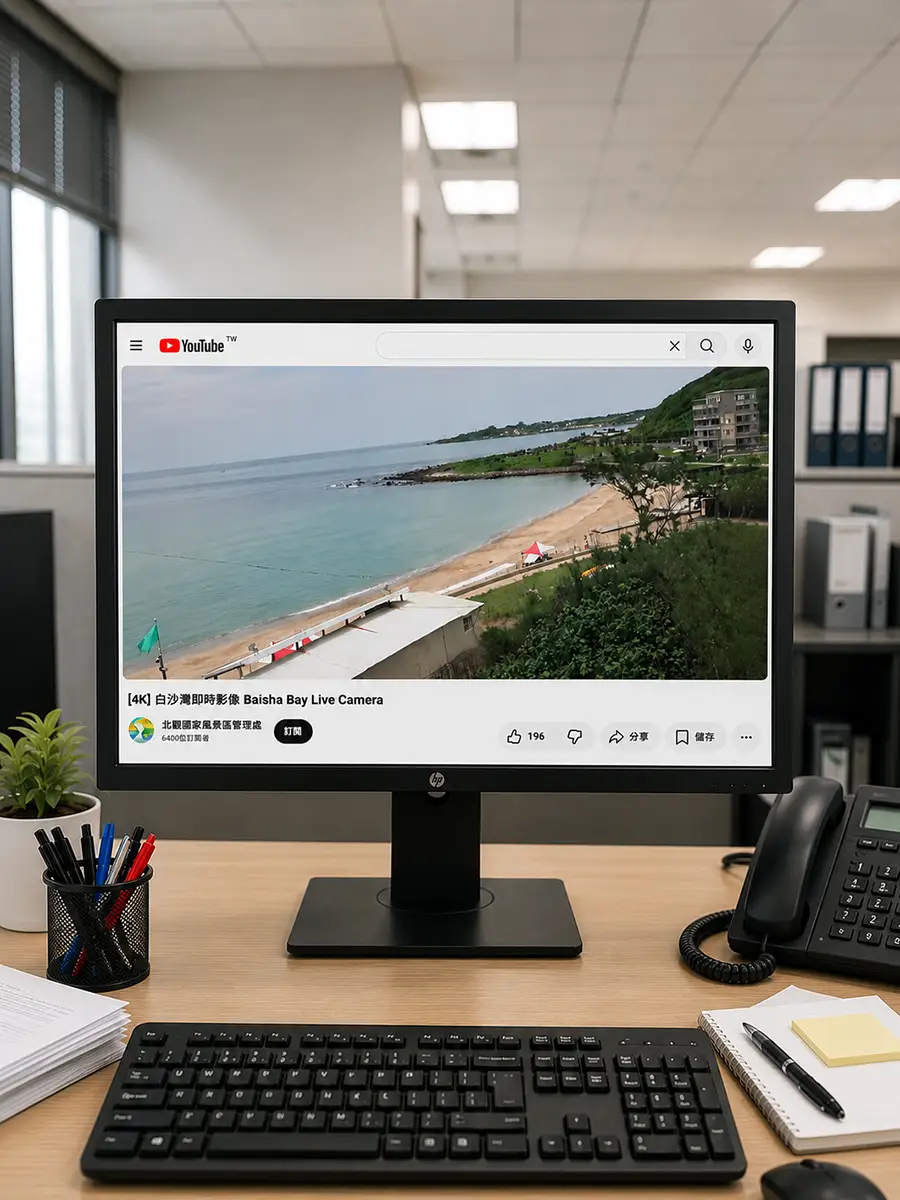
An integrated virtual-and-physical strategy was adopted to expand marketing synergies. Online, digital twin technology was used to create high-precision 3D models and gamified applications for national scenic areas, such as the Queen's Head in Yehliu, generating innovative experiences that seamlessly bridge online and offline engagement. At the same time, 4K high-resolution live camera feeds, known as "Camera Man," were widely installed across key scenic sites, enabling the public to view them online and helping create buzz. Offline, visitor centers integrated immersive interactive technologies such as VR/AR, and these were combined with interactive selfie functions and e-commerce platforms. For example, the “Alishan Easy Go” tourism e-commerce platform integrated more than 10 domestic and international sales channels, effectively converting digital engagement into tangible tourism value.

PWA Mobile Travel Service and OhBear AI Assistant
To implement a "mobile-first" approach, the administration built a "PWA Mobile Travel Service" that can be used without downloading an app. The system was developed modularly for seven major tourism regions, including northern, central, southern, eastern, and offshore island areas, with the Northern Region, Eastern Region, and Kinmen modules already completed. Leveraging Location-Based Services LBS, it integrates nearby information on dining, lodging, attractions, shopping, transportation, and transport hubs.
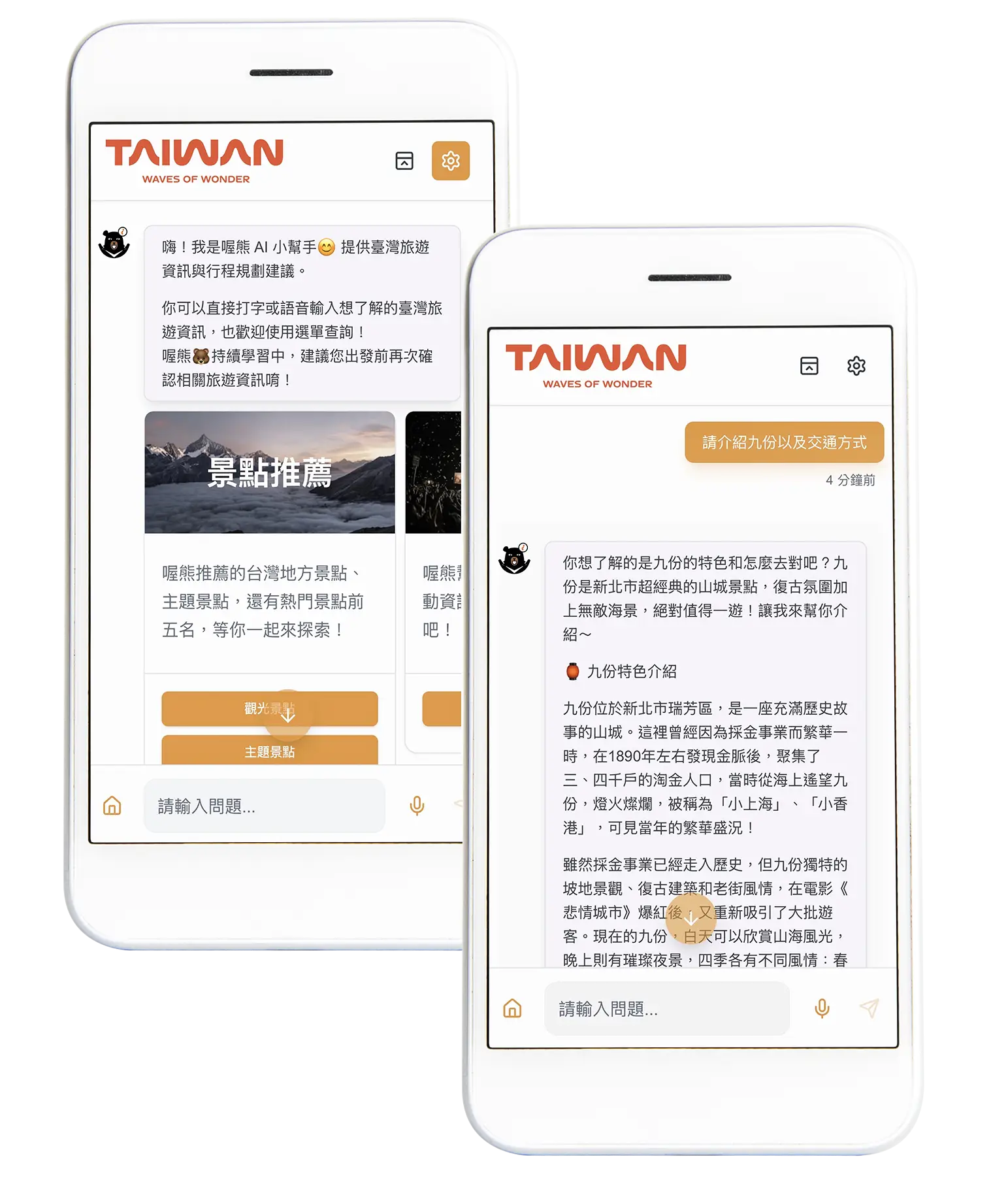
At the same time, the "OhBear AI Assistant" was upgraded to support natural conversations in multiple languages (including Chinese, English, and Japanese) helping overcome language barriers. Through "guided Q&A," it identifies travelers' needs and creates customized itineraries with both images and text. The system is also connected to the official databases of Taiwan's 13 national scenic areas, mitigating "hallucination" risks typical of general AI, and ensuring that travelers have access to the most accurate and up-to-date official information on local festivals, dining, and lodging.

Connecting to Big Data Platforms and Building a Real-Time Visitor Flow Warning Dashboard
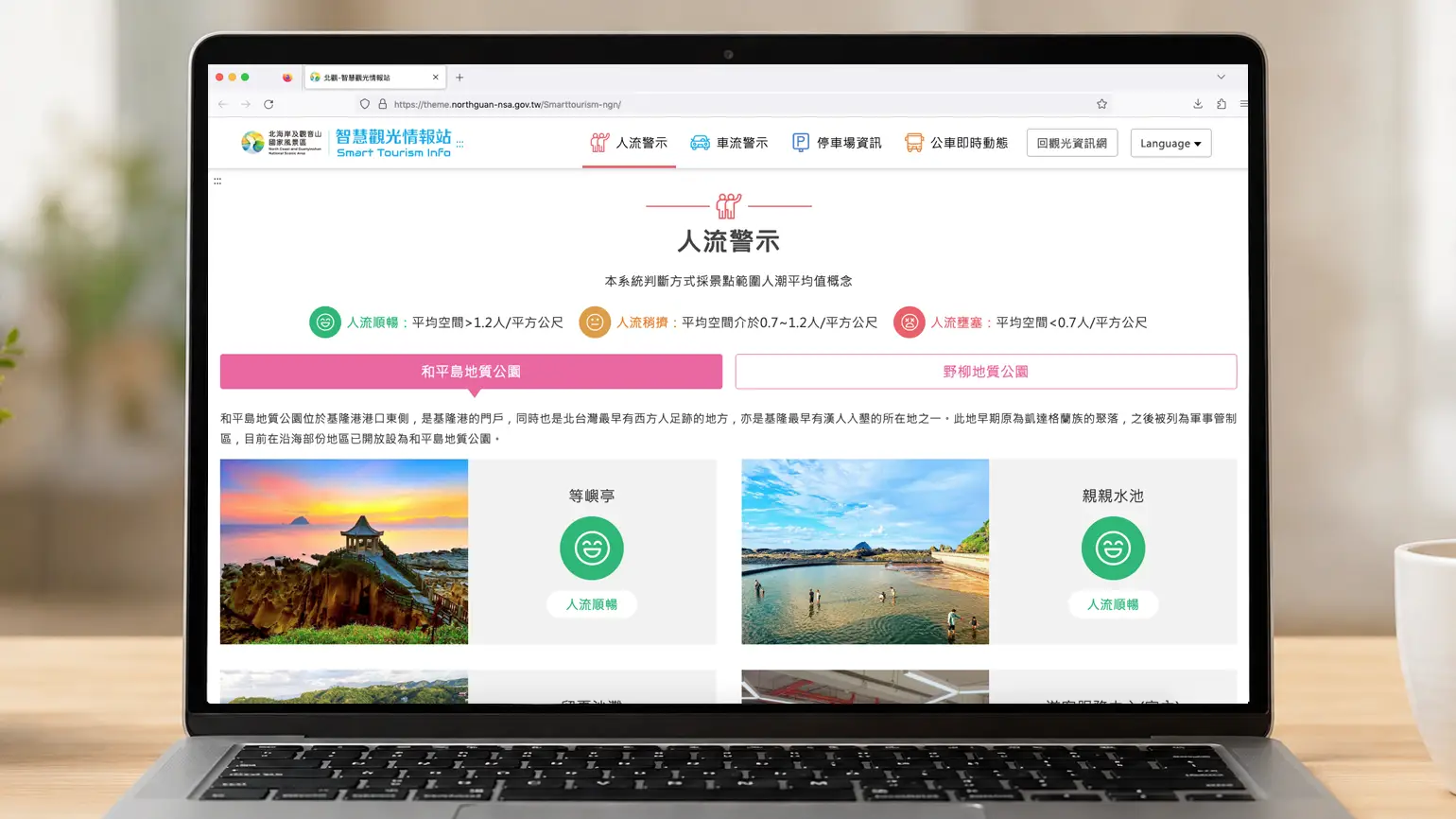
The Tourism Administration leveraged telecommunications big data for visitor flow analysis. By synchronously connecting to big data platforms, it developed a real-time smart visitor flow warning utilizing color-coded indicators (green, yellow, and red). This tool provides National Scenic Area Administrations with real-time decision-making support for hotspot dispersal and traffic management during consecutive holidays.
Developing an AI Multilingual Guide System
To address the shortage of foreign-language tour guides, the Tourism Administration developed an installation-free, web-based real-time translation guide system for mobile devices. Chinese-speaking guides simply activate the system's voice narration. After visitors scan a QR Code to enter the chatroom, the system automatically detects the language settings on their phones and uses AI to translate the narration in real time into the users' native languages. Currently supporting 26 languages across the Americas, Europe, Southeast Asia, and East Asia, the system has been deployed for on-site operations across National Scenic Areas.
Promoting a Digital Twin of the Queen's Head at Yehliu
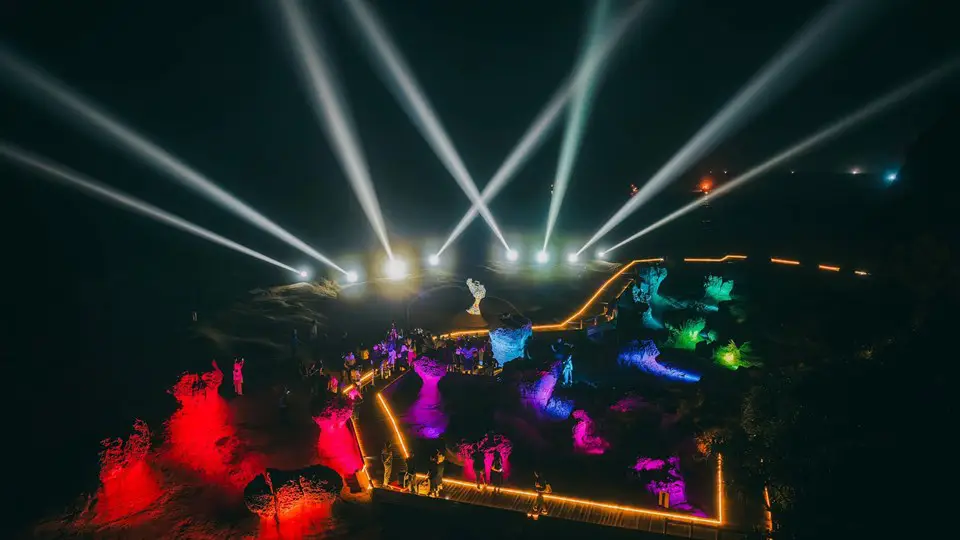
In collaboration with the Ministry of Digital Affairs, the Tourism Administration promoted the "Urban and Rural Modeling and Digital Twin Project," using Yehliu Geopark under the North Coast and Guanyinshan National Scenic Area Administration (NSA) as a demonstration site to create high-precision 3D digital models of the "Queen's Head" and "Cute Princess." In the future, these models may also be integrated with the "Yehliu Night Tours: See the Queen's Head Illumimated at Night" event through digital twin creative submissions, light projection performances, puzzle-solving games, and personalized 3D-printed souvenirs, creating innovative tourism experiences that seamlessly link online and offline engagement.

AI Smart Translation Counter
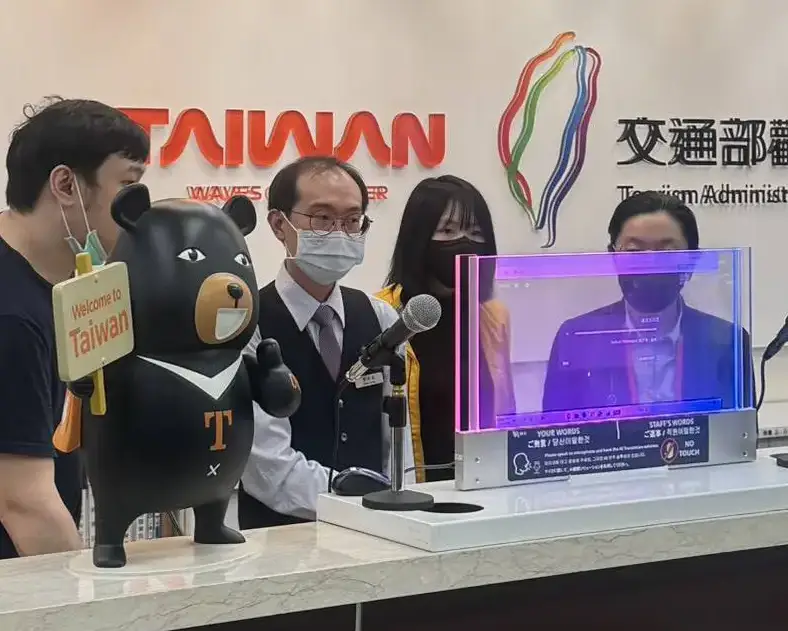
To create a more welcoming environment for international visitors, the administration has since 2023 successively installed AI Smart Translation Counters at Taipei Songshan, Taiwan Taoyuan, and Kaohsiung international airports. In 2025, an upgraded version was further introduced at Taichung International Airport. Featuring a transparent dual-screen display, the counter provides real-time two-way translation that can automatically detect and switch among more than 20 languages. Operating without the need for manual configuration, it breaks down language barriers and strengthens the capacity of frontline visitor service centers.